 LANGUAGE
 Español
 عربى
عربى
Xinhong Valve & Fitting
Xinhong Valve & Fitting
Xinhong Valve & Fitting
Xinhong Valve & Fitting
Xinhong Valve & Fitting
Xinhong Valve & Fitting
Xinhong Valve & Fitting
Xinhong Valve & Fitting
Xinhong Valve & Fitting
Xinhong Valve & Fitting
Xinhong Valve & Fitting
Xinhong Valve & Fitting
Xinhong Valve & Fitting
Xinhong Valve & Fitting
Xinhong Valve & Fitting
Xinhong Valve & Fitting
-
 [email protected]
-
 +86-15058995341

Search
Category
Hot Products


Spring Check Valve Company
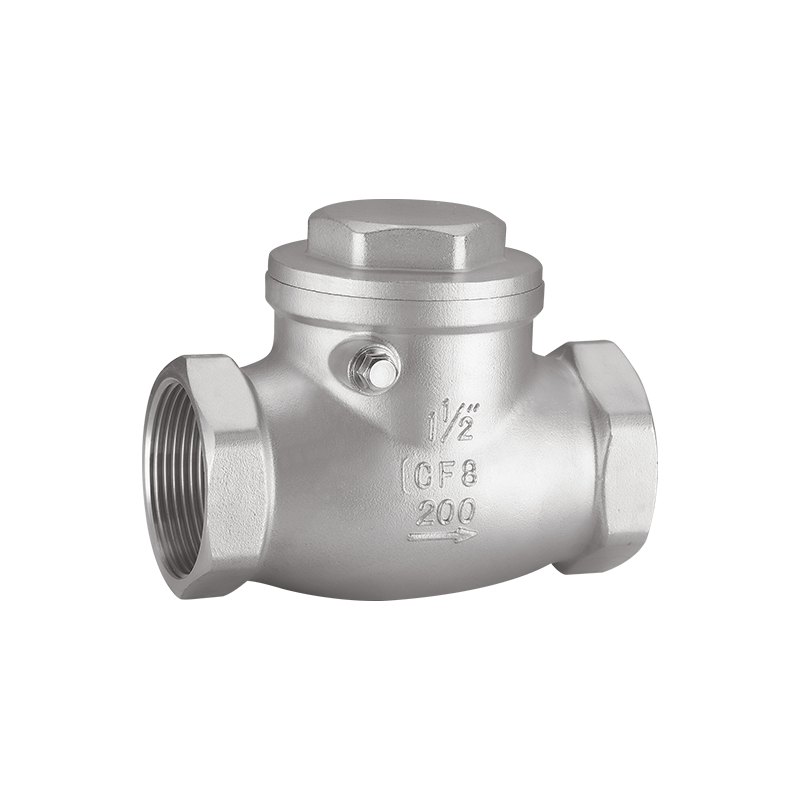
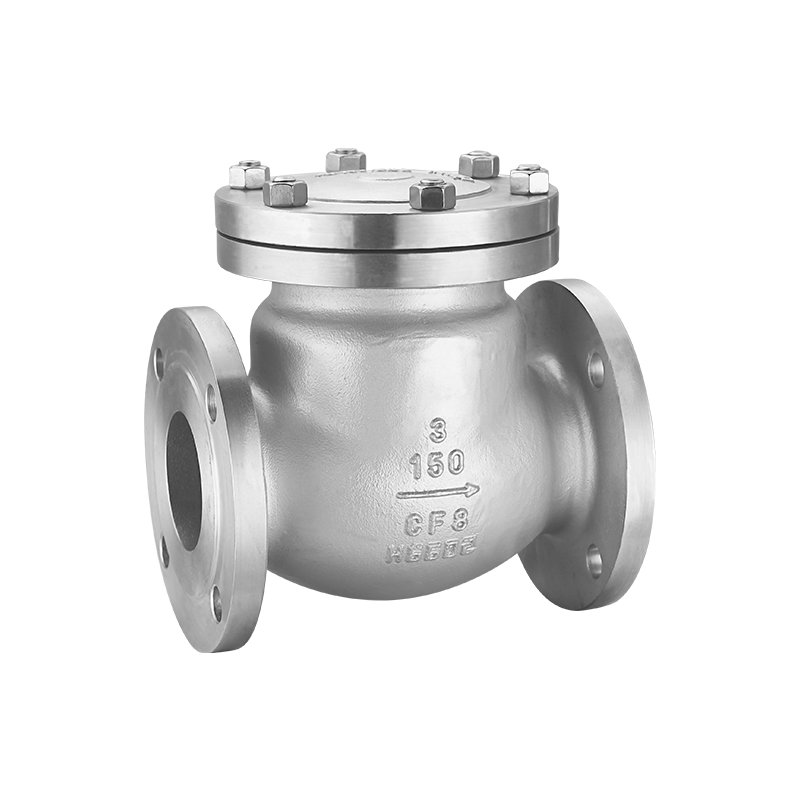
As a professional valve manufacturer, the greatest advantage of check valves lies in their automatic opening and closing function, which effectively prevents backflow and protects the safe operation of pumps and piping systems. Check valves require no manual operation and automatically open and close based on the flow direction and pressure differential of the medium. They feature a simple structure, ease of use, and reliable operation.
XINGHONG offers a variety of check valve types, including swing, lift, ball, and wafer types, to meet the needs of diverse operating conditions and installation environments. Their advantages include low fluid resistance, sensitive opening and closing, tight sealing, and flexible installation space. During the manufacturing process, we select high-quality stainless steel, carbon steel, and alloy steel materials, combining precision machining with rigorous testing processes to ensure the valve body is corrosion-resistant, wear-resistant, and pressure-resistant.
With high reliability and a wide range of specifications, XINGHONG check valves are widely used in petroleum, chemical, power, water treatment, and water supply and drainage systems, extending equipment life and significantly improving the stability and safety of pipeline operations.



Company
Zhejiang Xinhong Valve & Fitting Co., Ltd.
Zhejiang Xinhong Valve & Fitting Co., Ltd. is a China Check Valve Manufacturer and OEM/ODM Check Valve Factory with 16 years of experience in valve production, sales, and service. The company occupies a land area of 2,000 square meters and has 120 staff. The company has a modern factory building, excellent machining equipment, a boring machine, a vertical lathe, a CNC lathe, plasma spray welding, chemical composition analysis, mechanical performance testing, hardness testing, an imported direct-reading spectrometer, and non-destructive testing. Ensure that products conform to the relevant design and inspection standards, so that the quality level of products is continuously improved.
News
-
The throttling screw end gate valve has gained recognition in process industries as a compact solution for both isolation and mode...
READ MORE -
The manual socket welding threaded ball valve has emerged as a preferred flow control component for medium-pressure piping systems...
READ MORE -
A ball valve is simple. A ball with a hole through it. A stem. A handle. Turn the handle ninety degrees, and the hole aligns with ...
READ MORE
Message Feedback
Check Valve Industry Knowledge Extension
What is the primary function of a spring check valve?
A spring check valve allows fluid to flow in one direction and prevents reverse flow. It incorporates an internal spring that assists the disc or poppet in closing quickly once forward flow decreases. This mechanism minimizes backflow and supports stable system operation.
How does the spring improve valve responsiveness?
The internal spring enables faster closure than gravity-dependent designs. As soon as the pressure differential drops, the spring pushes the disc toward the seat, reducing the likelihood of water hammer or sudden pressure changes. This responsiveness is especially beneficial in systems with fluctuating flow rates or rapid pump shutdowns.
Are spring check valves suitable for both horizontal and vertical installations?
Since the spring does not rely on orientation to operate, these valves function reliably in either configuration. This versatility makes them a practical choice for compact systems or piping layouts where gravitational check valves may not perform consistently.
Do spring check valves contribute to system efficiency?
They can support overall efficiency by maintaining stable flow conditions and reducing mechanical stress on pumps and downstream components. Quick closure reduces loss of prime in pump systems and enhances system reliability.
What types of applications commonly use spring check valves?
Typical applications include water supply networks, HVAC systems, compressed air lines, and various industrial fluid processes. Their compact design and consistent operation make them suitable for installations with limited space or continuous flow cycling.
Advantages and Disadvantages of Materials Used in Stainless Steel Check Valves
Austenitic Stainless Steels (e.g., 304, 316)
Austenitic stainless steels are widely used due to their corrosion resistance and durability. Grades like 316 offer enhanced resistance against chlorides and certain chemicals, making them well-suited for marine or mildly corrosive environments. Their non-magnetic nature and good weldability further support widespread use. However, they may not be ideal for high-temperature applications where strength retention is critical. In addition, cost can be higher compared to carbon steel or lower-alloy materials, which may affect budget decisions in large installations.
Duplex Stainless Steels
Duplex steels combine austenitic and ferritic structures to achieve improved strength and stress corrosion cracking resistance. They are chosen for more demanding environments involving elevated pressures or aggressive media. While duplex materials offer strong mechanical performance, they require careful welding procedures to maintain balanced microstructures. Their higher price and more demanding fabrication requirements can pose constraints for projects that do not require advanced corrosion resistance.
Precipitation-Hardening Stainless Steels (e.g., 17-4 PH)
Precipitation-hardening grades provide high strength-to-weight ratios and stable mechanical properties over a broad temperature range. Valves made from these materials perform well in high-pressure or high-cycle conditions. Nevertheless, they may not deliver the same general corrosion resistance as 316 stainless steel in some chemical or chloride-rich environments. Their specialized heat treatment requirements also increase manufacturing complexity. As a result, they are generally selected for niche applications rather than general-purpose fluid systems.
How Often Should Industrial Check Valves Be Replaced?
The replacement interval for industrial check valves depends on several factors, including operating conditions, media characteristics, valve design, and maintenance practices. While no single timeline applies to every system, the following guidelines can assist in planning replacement schedules:
- Operating Frequency:
Systems with continuous flow cycling or frequent pressure fluctuations may require earlier replacement due to seat wear, spring fatigue, or disc erosion.
- Media Characteristics:
Abrasive fluids, slurries, or chemically aggressive media can shorten service life. Materials such as elastomeric seats or soft seals may degrade faster in these conditions.
- Pressure and Temperature Exposure:
Valves operating near the upper limits of their rated pressure or temperature ranges experience greater stress. Regular inspection is essential to identify fatigue or deformation.
- Manufacturer's Recommendations:
Many industrial valve suppliers provide estimated service life ranges. These guidelines consider material selection, design features, and typical application sectors.
- Preventive Maintenance Schedules:
Facilities operating under strict reliability standards often review check valve conditions annually. Replacement may occur every 3–7 years depending on wear patterns observed during inspections.
In the spirit of win-win cooperation, Xinhong is willing to cooperate with you sincerely and work together to create a brilliant tomorrow.
Quick link
Products
Information
-
 +86-0577-86923185
-
 +86-15058995341
-
 +86-0577-86910175
-
 [email protected]
[email protected]
[email protected] -
 No.696, Binhai 5th Road, Wenzhou Economic & Technological Development Zone, Zhejiang, China
Mobile QR Code
Copyright © Zhejiang Xinhong Valve & Fitting Co., Ltd. All Rights Reserved.

Industrial Check Valves For Sale