 LANGUAGE
 Español
 عربى
عربى
Xinhong Valve & Fitting
Xinhong Valve & Fitting
Xinhong Valve & Fitting
Xinhong Valve & Fitting
Xinhong Valve & Fitting
Xinhong Valve & Fitting
Xinhong Valve & Fitting
Xinhong Valve & Fitting
Xinhong Valve & Fitting
Xinhong Valve & Fitting
Xinhong Valve & Fitting
Xinhong Valve & Fitting
Xinhong Valve & Fitting
Xinhong Valve & Fitting
Xinhong Valve & Fitting
Xinhong Valve & Fitting
-
 [email protected]
-
 +86-15058995341

Search
Category
Hot Products


100 Mesh Y Strainer Supplier
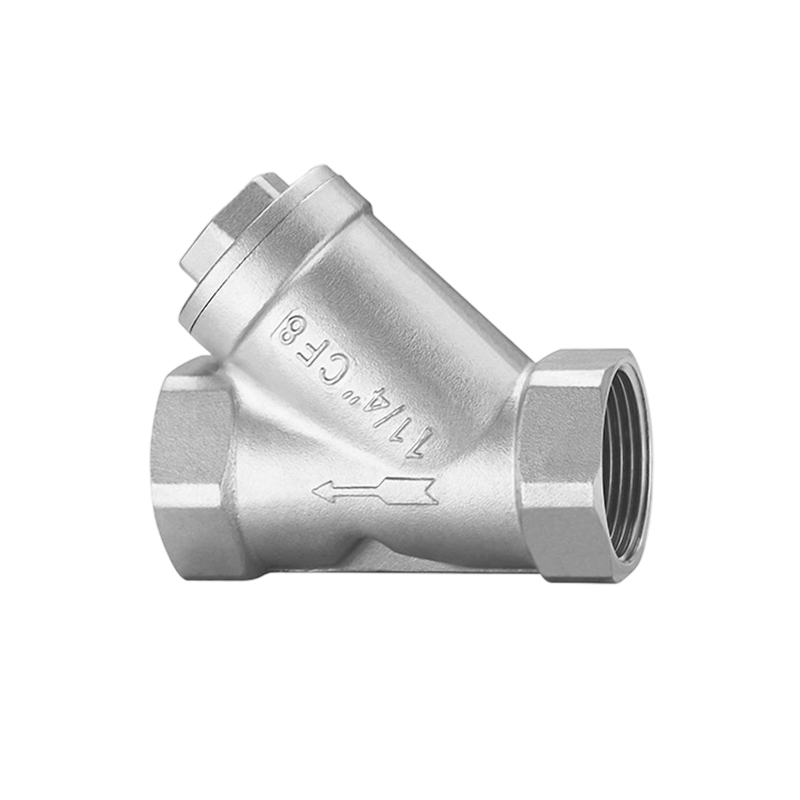
As a manufacturer of valves and pipe accessories, XINGHONG prioritizes practicality and durability in the development and production of its Y-type strainers. Y-type strainers are primarily installed at the front end of pumps, valves, and other equipment to intercept solid impurities, rust, welding slag, and other particles in pipeline media, thereby protecting downstream equipment from malfunctions caused by clogging or abrasion. Their Y-shaped design occupies a small footprint and is easy to install. They can be used in both horizontal and vertical pipes, offering flexible applications.
XINGHONG utilizes high-quality cast steel, stainless steel, or ductile iron in its manufacturing process, ensuring the strainers possess sufficient strength and pressure resistance. The precision-machined internal filter screen ensures high filtration accuracy and easy cleaning and disassembly, effectively extending the service life of the equipment. Y-type strainers also feature a simple structure, low fluid resistance, and a wide range of applications, ensuring reliable operation in applications ranging from petroleum, chemical, pharmaceutical, and municipal water supply networks. With its superior quality and reliable performance, the XINGHONG Y-type strainer has become an indispensable protective component in various pipeline systems.


Company
Zhejiang Xinhong Valve & Fitting Co., Ltd.
Zhejiang Xinhong Valve & Fitting Co., Ltd. is a China Y-Strainer Manufacturer and OEM/ODM Y-Strainer Factory with 16 years of experience in valve production, sales, and service. The company occupies a land area of 2,000 square meters and has 120 staff. The company has a modern factory building, excellent machining equipment, a boring machine, a vertical lathe, a CNC lathe, plasma spray welding, chemical composition analysis, mechanical performance testing, hardness testing, an imported direct-reading spectrometer, and non-destructive testing. Ensure that products conform to the relevant design and inspection standards, so that the quality level of products is continuously improved.
News
-
A globe valve controls flow. Turn the handle. A disc moves up and down. It seats against an opening. Flow stops or goes. A screw e...
READ MORE -
Water flows through pipes. So do chemicals. Coolant. Fuel. Oil. All of them carry debris. Rust flakes. Pipe dope. Sediment. That d...
READ MORE -
Most people think a ball valve just turns on and off. Two ports. One way in, one way out. But a 3 port ball valve does more. It ad...
READ MORE
Message Feedback
Y-Strainer Industry Knowledge Extension
What are the characteristics of a 100 Mesh Y Strainer?
100 mesh screen has 100 openings per inch, corresponding to an approximate opening size of 149 microns (0.149 millimeters) or 0.0059 inches. This specification makes it suitable for capturing fine particulate matter. The characteristics of such a strainer are summarized in a table that outlines its key parameters and typical applications.
|
Characteristic |
Description |
Implication / Typical Use |
|
Filtration Rating |
100 Mesh (approx. 149 micron). |
Designed to capture relatively fine particles; protects sensitive instrumentation, small orifice control valves, and spray nozzles. |
|
Strainer Type |
Y-Type (or Wye-Type). |
Compact design where the strainer basket sits in the side branch of the 'Y', allowing for inline installation with the cover oriented for access. |
|
Flow Path |
Fluid enters, passes through the cylindrical screen basket, and exits with debris collected inside the basket. |
Creates a pressure drop; finer meshes like 100 mesh result in a higher pressure drop than coarser screens and may require more frequent cleaning. |
|
Typical Materials |
Body: Cast iron, carbon steel, stainless steel. Screen: Stainless steel wire mesh. |
Material selection depends on fluid compatibility and pressure rating. Stainless steel screens are common for corrosion resistance. |
|
Maintenance |
Requires periodic shut-down to remove the basket from the yoke for cleaning. |
Not suitable for continuous processes without a bypass loop unless a duplex unit is used. Ideal for applications with intermittent service. |
What is the difference between a stainless steel Y strainer and a duplex basket strainer?
While both devices serve the same primary function of solids separation, a stainless steel Y strainer and a duplex basket strainer differ significantly in their design, operational continuity, and typical use cases. These differences can be examined across three main aspects.
Design and Flow Configuration:
A Y strainer is a single-unit device with a compact, Y-shaped body. The fluid flows into the inlet, is directed into a cylindrical screen basket mounted at an angle (typically 45-60 degrees), and clean fluid exits through the outlet. The debris is collected inside the single basket. In contrast, a duplex basket strainer consists of two parallel cylindrical chambers, each containing a full-size basket, connected by a diverting valve. This design allows flow to be directed through one basket while the other is isolated, cleaned, or serviced.
Operational Continuity and Maintenance:
The maintenance of a standard Y strainer necessitates a complete shutdown of the flow through that pipeline to open the yoke or end cap and clean the single basket. This makes it suitable for systems that can tolerate intermittent stoppages. A duplex strainer is designed specifically for continuous processes. By simply operating the diverting valve, flow can be switched from the dirty basket to the clean standby basket in a matter of seconds without interrupting system operation, enabling maintenance on the isolated side.
Application and Cost Considerations:
Y strainers are generally more economical, have a smaller installation footprint, and are commonly used for protecting equipment in applications where periodic shutdown for cleaning is acceptable or where line strainers are installed in standby pump lines. Duplex basket strainers represent a higher initial investment and require more space. They are specified for critical applications where process interruption is not feasible, such as in fuel oil lines to boilers, main cooling water supply to production machinery, or continuous chemical feedstock lines.
What are Y-Type Pipe Strainers?
The design consists of a main pipe body with the straining element—a perforated or wire mesh screen basket—housed in the angled leg of the Y. The strainer is installed so that the flow direction enters the straight run of the body. The fluid is forced to pass through the screen basket, which is positioned at an angle, and the cleaned fluid exits through the opposite side of the straight run.
The primary purpose of a Y strainer is to remove coarse and, with finer mesh screens, medium-sized particulate matter such as rust, scale, pipeline debris, or sediment from the fluid stream. They are commonly installed upstream of pumps, meters, control valves, steam traps, and regulators. Their angled design offers a practical advantage: it allows for the screen basket to be removed for cleaning through the end cap (or bonnet) on the yoke without requiring the strainer body to be removed from the pipeline, provided there is sufficient clearance.
Y strainers are valued for their relative simplicity, cost-effectiveness, and wide range of available sizes and materials, including bronze, cast iron, carbon steel, and various stainless steel grades. They are typically selected for applications involving lower solid-loading capacities where maintenance intervals are manageable. The choice of screen mesh size, from coarse to fine, is tailored to the specific protection requirements of the downstream component. While effective, it is important to note that they contribute to a system pressure drop, and finer mesh screens will require more frequent inspection and cleaning to prevent excessive clogging.
In the spirit of win-win cooperation, Xinhong is willing to cooperate with you sincerely and work together to create a brilliant tomorrow.
Quick link
Products
Information
-
 +86-0577-86923185
-
 +86-15058995341
-
 +86-0577-86910175
-
 [email protected]
[email protected]
[email protected] -
 No.696, Binhai 5th Road, Wenzhou Economic & Technological Development Zone, Zhejiang, China
Mobile QR Code
Copyright © Zhejiang Xinhong Valve & Fitting Co., Ltd. All Rights Reserved.

Stainless Steel Y-Strainer Factory