LANGUAGE

 Español
 عربى
عربى
Xinhong Valve & Fitting
Xinhong Valve & Fitting
Xinhong Valve & Fitting
Xinhong Valve & Fitting
Xinhong Valve & Fitting
Xinhong Valve & Fitting
Xinhong Valve & Fitting
Xinhong Valve & Fitting
Xinhong Valve & Fitting
Xinhong Valve & Fitting
Xinhong Valve & Fitting
Xinhong Valve & Fitting
Xinhong Valve & Fitting
Xinhong Valve & Fitting
Xinhong Valve & Fitting
Xinhong Valve & Fitting
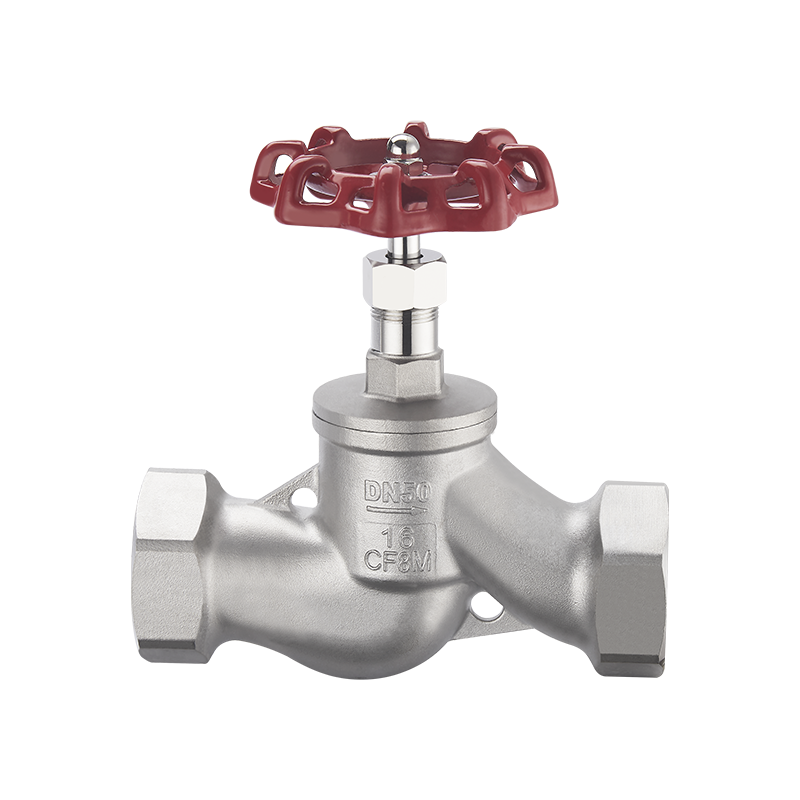
A globe valve controls flow. Turn the handle. A disc moves up and down. It seats against an opening. Flow stops or goes. A screw end globe valve connects to pipes with threads. No welding. No flanges. Just screw it in. Here is what buyers look for.
What a Screw End Globe Valve Does
The valve starts and stops flow in a pipe
A screw end globe valve has a handwheel on top. Turn it clockwise. The disc moves down. It presses against the seat. Flow stops. Turn it counterclockwise. The disc moves up. Flow starts.
The disc moves perpendicular to the flow. The fluid turns twice inside the valve. In through the bottom. Out through the side. The turns create pressure drop. More than a gate valve. Less than a needle valve.
Threaded ends for easy installation
The valve has male threads on both ends. A screw end globe valve screws into pipe fittings. A wrench on the valve body. A wrench on the pipe. Tighten. Done. No welding. No flanges. No gaskets.
Threads are NPT in the US. BSP in Europe. The valve needs the right thread. Wrong thread, and it will not seal.
Where Screw End Globe Valves Get Used
Residential water lines
A house needs shutoff valves. A screw end globe valve on the water heater. On the washing machine supply. On the outdoor spigot. Turn the handle. Water stops. Replace the fixture without shutting off the whole house.
Hydronic heating systems
Radiators need flow control. A screw end globe valve on each radiator balances the system. More heat to the living room. Less to the bedroom. Turn the handle. Adjust the flow.
Compressed air lines
Air tools need shutoff valves. A screw end globe valve at the compressor outlet. Turn it off when changing tools. No air leak.
Here is where a screw end globe valve is a good choice:
- Water heaters — shutoff for replacement
- Washing machines — supply shutoff
- Radiators — flow balance
- Air compressors — tool isolation
- Small irrigation — zone shutoff
What to Look for in a Screw End Globe Valve
Body material matches the fluid
Brass is the common screw end globe valve material. Handles water, air, and mild chemicals. Does not rust. Easy to machine.
Bronze is for saltwater and marine use. Stainless steel is for corrosive chemicals. Cast iron is for large valves, but not common in screw end.
Here is what body materials handle:
- Brass — water, air, mild chemicals
- Bronze — saltwater, marine
- Stainless steel — corrosive, food processing
- Cast iron — water, steam, large sizes
Disc and seat material
The disc seals against the seat. A screw end globe valve with a metal disc and seat is durable. It is harder to seal tight. A disc with a PTFE insert seals better. It wears out faster.
Soft seat valves are for water and air. You want a tight shutoff. Hard seat valves are for steam and high temperature. Soft seat would melt.
Size matches the pipe
A screw end globe valve is sized by pipe diameter. 1/2 inch for sinks and toilets. 3/4 inch for water heaters and washing machines. 1 inch for main supply lines.
Too small, and the valve restricts flow. Too large, and it is expensive and heavy.
What Goes Wrong with Cheap Screw End Globe Valves
The valve leaks at the stem
The stem goes through the bonnet. A packing seal surrounds it. Cheap packing dries out. It shrinks. Water leaks out around the handle. A screw end globe valve with a leaky stem is unsafe. Steam burns. Water damages floors.
The disc does not seal
The disc does not seat properly. The screw end globe valve drips when closed. A small drip. It gets worse. You tighten the handle harder. The disc deforms. It still drips.
The handle breaks off
The handwheel is cast iron or cheap plastic. Over-tighten it. The spokes break. The handle spins. The valve does not open or close.
Threads gall and seize
Steel threads in a brass valve. Galling. The threads weld together. The screw end globe valve cannot be unscrewed. Pipe replacement is needed.
A screw end globe valve is a simple valve. It stops flow. It starts flow. It works for water, air, and mild fluids.
Choose brass for applications. Soft seat for tight shutoff. Hard seat for steam. Match the size to your pipe.
A cheap valve leaks at the stem. The disc does not seal. The handle breaks. You replace it in a year. You spend more over time.
A good valve costs more upfront. It seals tight. The stem does not leak. The handle stays intact. It lasts for decades.
For residential, commercial, and industrial systems, a screw end globe valve is a reliable choice. It is simple. It is effective. It is easy to install. Buy a good one. Your plumbing will be safer. Your heating will be balanced. Your air tools will be ready. That is the point of a valve. To control flow. A good globe valve does that. A bad one does not. Choose wisely.