LANGUAGE

 Español
 عربى
عربى
Xinhong Valve & Fitting
Xinhong Valve & Fitting
Xinhong Valve & Fitting
Xinhong Valve & Fitting
Xinhong Valve & Fitting
Xinhong Valve & Fitting
Xinhong Valve & Fitting
Xinhong Valve & Fitting
Xinhong Valve & Fitting
Xinhong Valve & Fitting
Xinhong Valve & Fitting
Xinhong Valve & Fitting
Xinhong Valve & Fitting
Xinhong Valve & Fitting
Xinhong Valve & Fitting
Xinhong Valve & Fitting
Most people think a ball valve just turns on and off. Two ports. One way in, one way out. But a 3 port ball valve does more. It adds a third opening, which changes the game entirely. Now you can switch flow between two different lines. Or mix two incoming flows into one. Or send flow from one source to either of two places. One valve doing work that would otherwise take two or three standard valves.
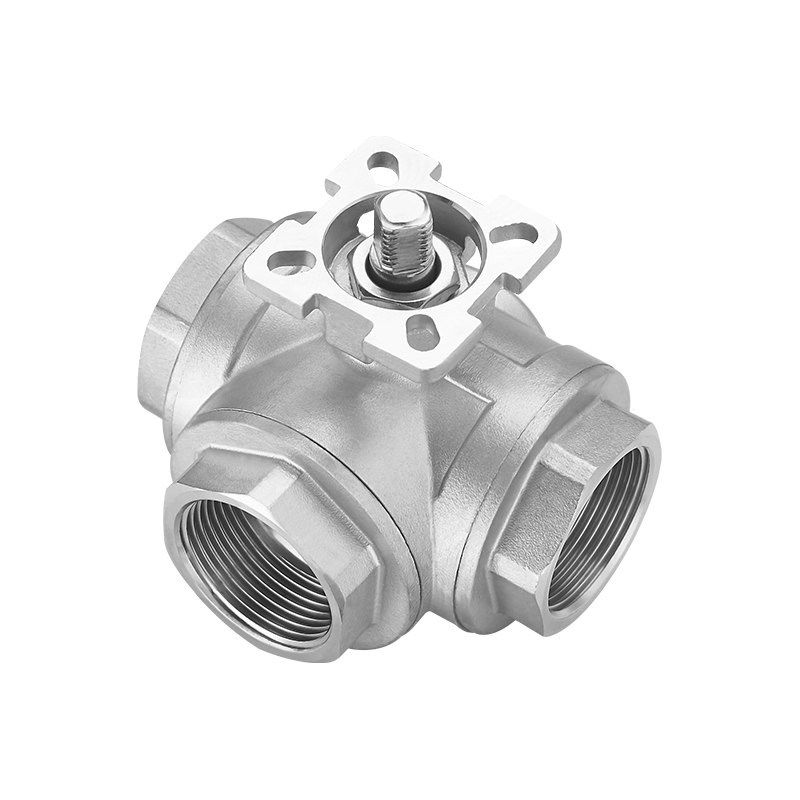
L-Port vs T-Port: Two Different Tools
Not every 3 port ball valve works the same. It all comes down to the shape of the hole inside the ball.
An L-port ball has a passage shaped like the letter L. It connects the center port to one side port at a time. Turn the handle, and the connection switches to the other side. This is your diverter. Flow comes in through the center and goes out left or right. One direction at a time. Simple.
A T-port ball has a T-shaped passage. Now things get more flexible. The T-port 3 port ball valve can connect all three ports at once. Two inlets mixing into one outlet. Or one inlet sending flow to both outlets simultaneously. You get options the L-port cannot offer.
Here is the practical difference:
- L-port — pick one destination at a time. Good for switching between tanks or filters.
- T-port — mix two sources or feed two destinations at once. Good for blending or parallel filling.
Where You Actually See These Valves
Walk through a chemical plant or a heating system, and you will find 3 port ball valve units in a few key spots.
Heating and cooling loops use them all the time. One valve switches hot water between different zones. No need to shut down the whole boiler just to redirect flow.
Chemical batch processing is another big user. Raw material comes in through one line. The 3 port ball valve sends finished product to different holding tanks. Turn the handle, and the destination changes.
Other common places:
- Bypass lines around pumps or filters. Valve opens the bypass so you can service equipment without stopping everything.
- Sampling systems. Divert a small flow to a test point, then send the rest back to the main line.
- Tank farms. One supply line feeding multiple storage vessels. Valve chooses which tank gets filled.
What to Watch When Buying One
A 3 port ball valve is not just a standard valve with an extra hole. There are details that matter.
First, know which port pattern you need. L-port for diverting. T-port for mixing or simultaneous flow. Get it wrong, and the valve will not do what you want.
Pressure ratings can be tricky. Some 3 port ball valve models have lower pressure limits than two-port versions of the same size. More ports mean more potential leak paths. The ball passage is more complex too. Check the specs before assuming it matches standard valve ratings.
Materials are the same as regular ball valves. Brass for water and air. Stainless steel for chemicals and food processing. PVC for corrosive fluids that attack metal. Pick what fits your fluid and environment.
Seat material matters. PTFE is standard for applications. It handles a wide temperature range and resists chemicals. Higher temperatures may need special seats.
Installing and Using One
A 3 port ball valve needs to go in the right orientation. The body usually marks which port is which. One might say "common" or "inlet." The others are outlets or secondary ports. Put it in backwards, and the handle positions will not match what the markings say.
Handle position tells you what is happening. On an L-port valve, the handle typically points to the active outlet. Handle pointing left means flow goes left. Handle pointing right means flow goes right. Some designs have a 45-degree position where all ports are closed.
Operating the valve is simple. Quarter turn moves from one position to the next. Do not force past the stops. Over-travel damages the ball or seats.
If the valve gets hard to turn, something is wrong. Debris on the ball. Swollen seats. Dried lubricant. Do not just force it. Figure out the problem or replace the valve.
Maintenance Over Time
A 3 port ball valve needs less attention than many other valve types. But it is not maintenance-free.
The stem seal is the common leak point. A small drip from the handle area often stops with a quarter turn of the stem nut. Do not overtighten. That makes the valve hard to turn.
Valves that sit in one position for months can stick. The seats bond to the ball. Exercise the valve periodically. Cycle it through all positions a few times a year.
If the valve needs disassembly, mark the position of everything before taking it apart. A 3 port ball valve has more internal parts than a standard valve. The ball orientation matters. Put it back wrong, and the handle positions will not match the flow pattern.
A Simple Solution for Complex Piping
When you need to switch between two lines or mix two sources, a 3 port ball valve is often the cleanest answer. One valve instead of two or three. One handle instead of several. Less piping, fewer leak points, simpler operation. Just match the port pattern to your application, and it will work for years with basic care.