LANGUAGE

 Español
 عربى
عربى
Xinhong Valve & Fitting
Xinhong Valve & Fitting
Xinhong Valve & Fitting
Xinhong Valve & Fitting
Xinhong Valve & Fitting
Xinhong Valve & Fitting
Xinhong Valve & Fitting
Xinhong Valve & Fitting
Xinhong Valve & Fitting
Xinhong Valve & Fitting
Xinhong Valve & Fitting
Xinhong Valve & Fitting
Xinhong Valve & Fitting
Xinhong Valve & Fitting
Xinhong Valve & Fitting
Xinhong Valve & Fitting
The throttling screw end gate valve has gained recognition in process industries as a compact solution for both isolation and moderate flow regulation within confined piping layouts. This valve variant combines a traditional rising-stem gate mechanism with a specially contoured disc that allows proportional flow control, while screw end connections eliminate the need for flanges or heavy bolting. Recent installation feedback indicates that these valves perform reliably in throttle service where space constraints prevent the use of globe valves, and their threaded ends simplify assembly in field-fabricated piping systems.
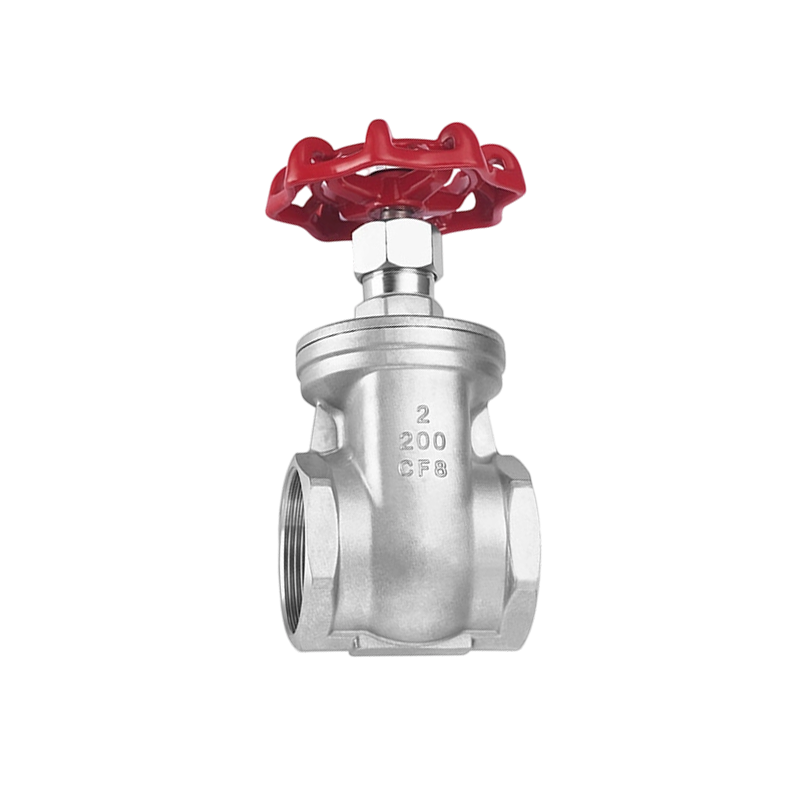
Valve Construction and Body Configuration
The throttling screw end gate valve is typically manufactured from forged or cast carbon steel, stainless steel, or bronze, depending on service pressure and fluid corrosivity. The body features integral screw ends machined to national pipe thread or British standard pipe thread standards. The rising-stem design provides visual stem extension as the gate moves upward, giving operators at-a-glance indication of valve position. Key construction details include solid wedge or flexible disc types, threaded or bolted bonnet configurations, backseat bushings that allow packing replacement under pressure, and integral hardfacing on seat rings for throttling applications.
Throttling Disc Geometry and Flow Characteristics
Unlike standard gate valves designed for fully open or fully closed service, this valve incorporates a modified gate profile that yields a more linear flow response across the travel range. The disc features a tapered or notched lower edge that gradually exposes the flow path as the stem rises, reducing the abrupt on-off characteristic of conventional gates. This geometry enables stable control at openings between 20 and 70 percent of full travel. Seat ring angles are machined to match the disc contour, ensuring bubble-tight shutoff when fully seated. The throttling capability makes this valve suitable for bypass lines, equalizing circuits, and pump recirculation loops.
Screw End Connection and Installation Practices
The screw end connections offer several practical benefits over flanged or socket weld alternatives. Threaded joints require fewer components, eliminating gaskets, bolts, and nuts, which reduces inventory and installation time. Field crews can assemble threaded connections with basic pipe wrenches, avoiding welding equipment or qualified welders. For leak-tight sealing, installers apply anaerobic thread sealants, PTFE tape, or pipe dope compounds rated for the service temperature. Proper thread engagement calls for at least five full thread turns beyond hand-tight. During installation, workers apply backup wrenches to the valve body flats to prevent torque transmission through the bonnet that could misalign the gate or damage stem packing.
Manual Operation and Throttling Outstanding Practices
The valve operates via a multi-turn handwheel, with stem threads driving the gate upward or downward through a stem nut. Each full rotation produces predictable linear displacement, allowing fine flow adjustments. For throttling service, the valve performs outstanding when operated between 25 and 75 percent of full open. Operating below 20 percent can cause high fluid velocities that erode the gate lower edge, while above 80 percent provides little control resolution. Operators avoid rapid cycling or slamming the gate against the seat during closure, as repeated impact reduces leak-tight life. Key operational considerations include:
- Torque requirements rising significantly as the gate approaches fully closed against differential pressure;
- Handwheel size matched to valve dimensions, with larger wheels on bigger sizes for mechanical advantage;
- Stem thread lubrication schedules, typically every six months or 2000 cycles for smooth operation;
- Stem protector sleeves to keep dust and moisture away from exposed threads in outdoor environments.
Maintenance, Inspection, and Application Scenarios
Routine maintenance focuses on stem packing, thread lubrication, and seat condition. External leakage around the stem is addressed by adjusting packing gland nuts or replacing packing rings. Internal seat leakage indicates damage to the gate or seat rings, requiring disassembly for grinding or replacement of sealing surfaces. Quality assurance procedures include:
- Hydrostatic shell tests at 1.5 times rated pressure with no visible leakage;
- Seat leakage tests from both upstream and downstream directions;
- Dimensional inspection verifying thread gauge acceptance and end-to-end length;
- 10-cycle functional tests confirming smooth gate movement and backseat engagement.
The throttling screw end gate valve finds regular use in steam tracing lines, cooling water bypasses, tank car vapor equalization, and laboratory pilot plants. In petrochemical facilities, these valves control small-flow bleed streams. In power generation, they regulate seal water and turbine drain circuits. Their compact footprint suits them to equipment skids, analyzer panels, and instrument root valves where flanged alternatives would be too large.