LANGUAGE

 Español
 عربى
عربى
Xinhong Valve & Fitting
Xinhong Valve & Fitting
Xinhong Valve & Fitting
Xinhong Valve & Fitting
Xinhong Valve & Fitting
Xinhong Valve & Fitting
Xinhong Valve & Fitting
Xinhong Valve & Fitting
Xinhong Valve & Fitting
Xinhong Valve & Fitting
Xinhong Valve & Fitting
Xinhong Valve & Fitting
Xinhong Valve & Fitting
Xinhong Valve & Fitting
Xinhong Valve & Fitting
Xinhong Valve & Fitting
Common Types of Steel Pipe Valves
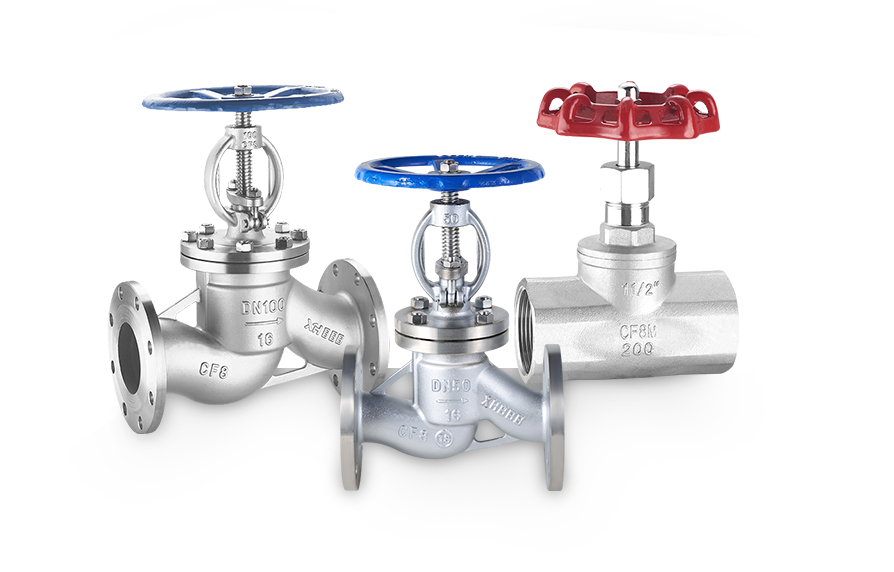
Gate Valves
Gate valves are among the widely used valve types in steel piping networks. They rely on a movable gate or wedge that slides up and down to allow or block flow. When fully opened, gate valves provide minimal pressure drop because the flow path becomes almost unrestricted. They are frequently installed in pipelines that require occasional on/off control rather than frequent throttling. Materials often include carbon steel or stainless steel, selected according to fluid, temperature, and pressure specifications.
Globe Valves
Globe valves are designed for precise flow regulation. Their internal structure forces fluid to move through a contoured passage, providing better control but with a higher pressure drop compared to gate valves. Steel globe valves are commonly used in steam lines, cooling water systems, and industrial processes requiring accurate throttling. Their advantages include straightforward maintenance and predictable closing characteristics.
Ball Valves
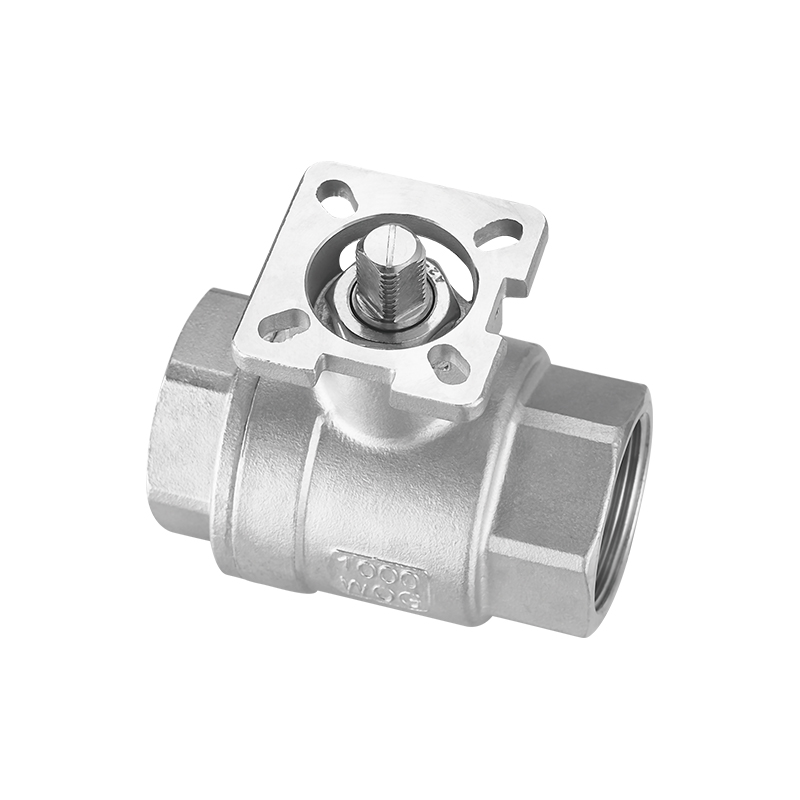
Ball valves use a spherical closure element with a central bore. By rotating the ball, operators can achieve reliable isolation with minimal effort. Steel ball valves may be floating or trunnion-mounted depending on pressure class and diameter. Their rapid operation and internal geometry make them suitable for automated systems. They are also well regarded for sealing performance in high-pressure and high-temperature environments.
Check Valves
Steel check valves are used to prevent reverse flow. They operate automatically in response to directional changes in fluid movement. Common types include swing, lift, and spring-loaded check valves. Materials such as cast steel or forged steel are selected to handle conditions found in refineries, power plants, and chemical processing facilities.
Butterfly Valves
Butterfly valves provide quarter-turn operation and are often used in large-diameter steel pipe systems. While lighter in weight compared to gate or globe valves, they offer a practical solution for shutdown and flow control in low- to medium-pressure applications. High-performance butterfly valves feature double-offset or triple-offset designs for more demanding environments.
3-Way Ball Valve Overview
A 3-way ball valve is designed to divert, distribute, or mix process media within steel piping systems. Its ball contains an L-shaped or T-shaped port configuration that determines the available flow paths. These valves are frequently installed in applications where flexibility in routing or combining flows is necessary, such as chemical processing, HVAC systems, and food-grade handling lines.
Key Characteristics of a 3-Way Ball Valve
|
Parameter |
Description |
|
Flow Port Configuration |
Typically L-port or T-port. L-port allows directional switching between two outlets, while T-port can enable mixing or simultaneous flow. |
|
Material Options |
Carbon steel, stainless steel, and alloy steels selected according to temperature, pressure, and fluid compatibility. |
|
End Connection Types |
Threaded, flanged, socket-weld, or butt-weld, depending on piping requirements and standards. |
|
Operation Methods |
Manual lever, gear operator, pneumatic actuator, or electric actuator. |
|
Pressure Ratings |
Manufactured in accordance with ASME or DIN classes to ensure correct performance at designated pressures. |
|
Sealing Materials |
Soft-seated (PTFE, RTFE) for general applications, or metal-seated for higher temperature or abrasive media. |
|
Applications |
Flow diversion, mixing operations, bypass lines, and systems requiring multiple routing options without installing several valves. |
|
Maintenance Considerations |
Periodic inspection of seats, stem packing, and port alignment ensures reliable performance over long-term usage. |
|
Advantages |
Compact construction, easy actuation, and the ability to replace more complex multi-valve arrangements. |
3-way ball valves offer operational efficiency and reduced installation complexity, particularly in systems where fluid routing must be adjusted regularly.
What is a 3-way manual ball valve and how does it function?

A 3-way manual ball valve is a mechanically operated valve that incorporates a three-port ball with an internal L- or T-shaped bore. Operators rotate the lever to align the bore with specific ports, allowing for flow diversion, mixing, or shutoff depending on the configuration. Because it requires no external power source, the valve is often chosen for small to medium pipe systems where manual control is sufficient. Its simple design supports dependable operation across a wide range of industrial environments.
Where are 3-way manual ball valves typically used in industrial piping systems?
These valves are widely used in applications where process media must be rerouted or combined without interrupting system operation. Examples include cooling water loops, fuel distribution systems, compressed air networks, and certain chemical processing lines. They are also suitable for auxiliary equipment arrangements such as sampling points or bypass circuits. Their compact size and manual actuation make them practical for installations with limited space or where automation is unnecessary.
What maintenance issues should operators monitor with 3-way manual ball valves?
Routine maintenance generally includes periodic inspection of seats, seals, and stem packing. Over time, soft-seated valves may experience wear due to temperature fluctuations, particulate matter, or chemical exposure. Ensuring that the handle mechanism remains smooth and properly aligned prevents accidental misoperation. In systems with high cycle frequency, it is advisable to check for gradual torque increases, which may signal internal buildup or minor seat deformation. Proper alignment of the L-port or T-port flow path is essential to avoid unintended bypassing or incomplete shutoff.
What are the main flow patterns, and how do they differ?
The two fundamental flow patterns are L-Port (also called 90-degree port) and T-Port (or 180-degree port).
L-Port Valve: The ball has an "L"-shaped bore. Turning the handle 90 degrees switches flow between two different paths. For example, it can divert flow from one common port to either of the two other ports, but it cannot connect all three simultaneously. It is primarily used for flow diversion or source selection.
T-Port Valve: The ball has a "T"-shaped bore. Depending on its position, it can connect all three ports to allow mixing, or it can divert flow between them. It is commonly used for flow mixing or diverting applications where blending two inflows into one common outlet is required.
How do I choose between an L-Port and a T-Port valve?
The choice depends entirely on the desired function in your system.
Choose an L-Port if you need to alternate or select between two sources for one destination, or send one source to one of two different destinations. A classic example is switching a pump's output between two different tank lines.
Choose a T-Port if you need to blend two fluids into one stream (mixing) or, in certain positions, divert one stream between two outlets. A common application is blending hot and cold water to achieve a desired temperature. Caution: It is critical to understand the specific position diagram for a T-port valve, as some positions may dead-end flow, potentially causing dangerous pressure buildup.
Can a 3-way ball valve be used to throttle or regulate flow?

It is not recommended. Ball valves are designed for positive shut-off or full flow diversion. Using them in a partially open position to regulate flow rate can cause several issues:
- Cavitation and Erosion: The high-velocity stream passing a partially open ball edge can quickly erode the ball and seat, especially with liquids.
- Unstable Control: The flow characteristic of a ball valve is not linear, making precise manual regulation difficult.
- Seat Damage: The soft seats (often PTFE) can become deformed or worn when subjected to prolonged impingement from a throttled flow. For regulation, a dedicated globe or needle valve is more appropriate.