LANGUAGE

 Español
 عربى
عربى
Xinhong Valve & Fitting
Xinhong Valve & Fitting
Xinhong Valve & Fitting
Xinhong Valve & Fitting
Xinhong Valve & Fitting
Xinhong Valve & Fitting
Xinhong Valve & Fitting
Xinhong Valve & Fitting
Xinhong Valve & Fitting
Xinhong Valve & Fitting
Xinhong Valve & Fitting
Xinhong Valve & Fitting
Xinhong Valve & Fitting
Xinhong Valve & Fitting
Xinhong Valve & Fitting
Xinhong Valve & Fitting
A 3 Port Ball Valve is a versatile flow control component widely used in HVAC and industrial systems where flexible, precise flow manipulation is required. Its unique design, featuring a multi-path ball core, enables efficient redirection, combination, or diversion of fluid flow paths—an attribute that makes it particularly well-suited for complex piping networks with interrelated circuits. Gaining a clear understanding of its application scenarios and operational characteristics helps system designers select optimal valve configurations, ensuring seamless integration with overall system objectives.
This article delves into the practical applications of 3 Port Ball Valves across diverse HVAC and industrial environments, highlighting their functional advantages and key use cases.
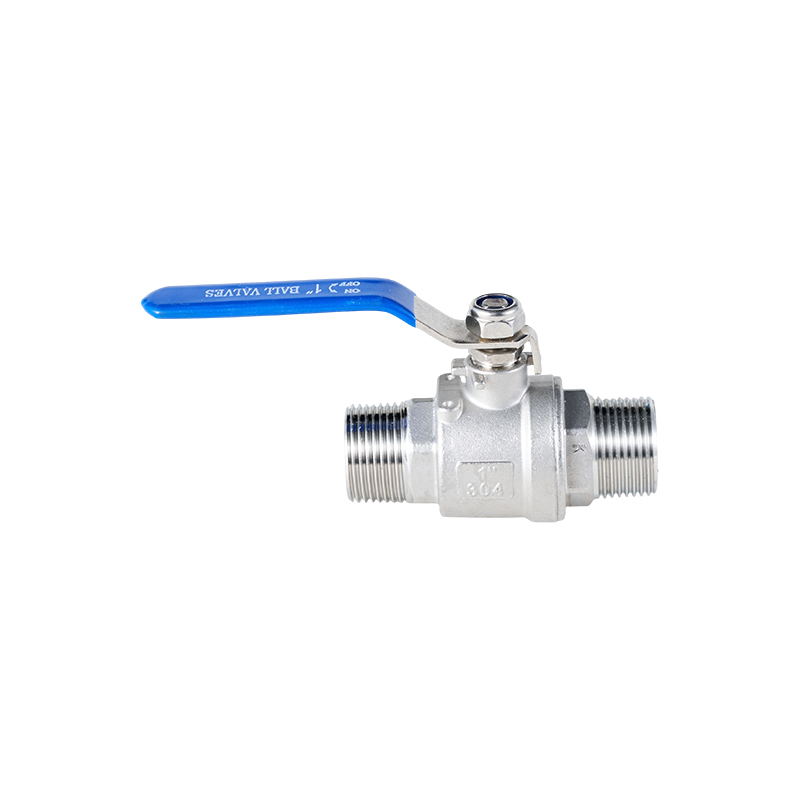
Applications in HVAC Systems
In HVAC systems, 3 Port Ball Valves play a critical role in redirecting heating or cooling media (such as water, glycol solutions, or refrigerants) to maintain precise temperature regulation. They facilitate dynamic thermal control by either mixing hot and cold fluids from separate circuits to achieve a target temperature or diverting flow between primary and secondary loops—for example, shifting fluid from a central chiller to zone-specific air handlers. Their compact, space-saving design allows easy integration into tight installation spaces, such as mechanical rooms or ceiling cavities, without compromising flow capacity or operational reliability.
Industrial Fluid Control Applications
Within industrial settings, 3 Port Ball Valves are indispensable for managing process flows, complex distribution networks, and essential utility lines (including water, steam, and chemical fluids). They significantly simplify piping layouts by eliminating the need for multiple two-port valves and complex manifold assemblies, thereby reducing the total number of components required for flow routing. This streamlining not only lowers initial installation costs but also minimizes potential leak points, enhancing system safety and operational efficiency in sectors such as manufacturing, petrochemicals, and food processing.
Advantages Compared to Two-Port Valves
A key advantage of 3 Port Ball Valves over traditional two-port valves is their ability to handle multiple flow paths with a single component, which drastically reduces overall system complexity. This integrated design simplifies maintenance routines, as technicians only need to service one valve instead of multiple discrete units, and improves operational clarity by minimizing the number of control points. Additionally, their ability to switch flow directions without disrupting system pressure helps maintain stable operation, a benefit that two-port valves often cannot match without additional bypass circuitry.
Typical System Configurations
Common configurations for 3 Port Ball Valves include flow diversion (directing a single inlet flow to two separate outlets), flow mixing (combining two inlet flows into a single outlet), and isolation of secondary lines (shutting down specific branches while maintaining flow in the primary circuit). Proper planning during the design phase is crucial: valve orientation must align with system logic to avoid flow inversion or pressure imbalances, and compatibility with existing piping diameters and connection types should be verified to ensure optimal performance.
Selection Tips for HVAC and Industrial Use
When selecting a 3 Port Ball Valve for HVAC or industrial applications, several key factors must be evaluated. Material compatibility is paramount—valve bodies and seals should be resistant to the specific fluid (e.g., corrosive chemicals, high-temperature steam) to prevent degradation. The control method (manual, electric, or pneumatic) should align with system requirements: automated valves are ideal for remote or precision control, while manual valves suit simple, low-frequency adjustment scenarios. Additionally, the installation environment (temperature, pressure, and exposure to contaminants) should be considered to select a valve rated for the intended operating conditions.
In summary, 3 Port Ball Valve solutions deliver flexible, efficient, and reliable flow control in both HVAC and industrial systems. A thorough understanding of their applications, advantages, and selection criteria ensures consistent system operation, extends equipment lifespan, and maximizes overall operational efficiency.