LANGUAGE

 Español
 عربى
عربى
Xinhong Valve & Fitting
Xinhong Valve & Fitting
Xinhong Valve & Fitting
Xinhong Valve & Fitting
Xinhong Valve & Fitting
Xinhong Valve & Fitting
Xinhong Valve & Fitting
Xinhong Valve & Fitting
Xinhong Valve & Fitting
Xinhong Valve & Fitting
Xinhong Valve & Fitting
Xinhong Valve & Fitting
Xinhong Valve & Fitting
Xinhong Valve & Fitting
Xinhong Valve & Fitting
Xinhong Valve & Fitting
In industrial pipeline systems, filtration plays a critical role in protecting equipment and maintaining stable operation. A 100 Mesh Y Strainer is frequently discussed when engineers and maintenance teams evaluate filtration options for liquid and gas applications. Its structure, filtration capability, and installation flexibility often place it side by side with other common filter types. Understanding how a 100 mesh Y strainer compares with alternative filtration devices helps decision-makers select solutions that align with system requirements rather than assumptions.
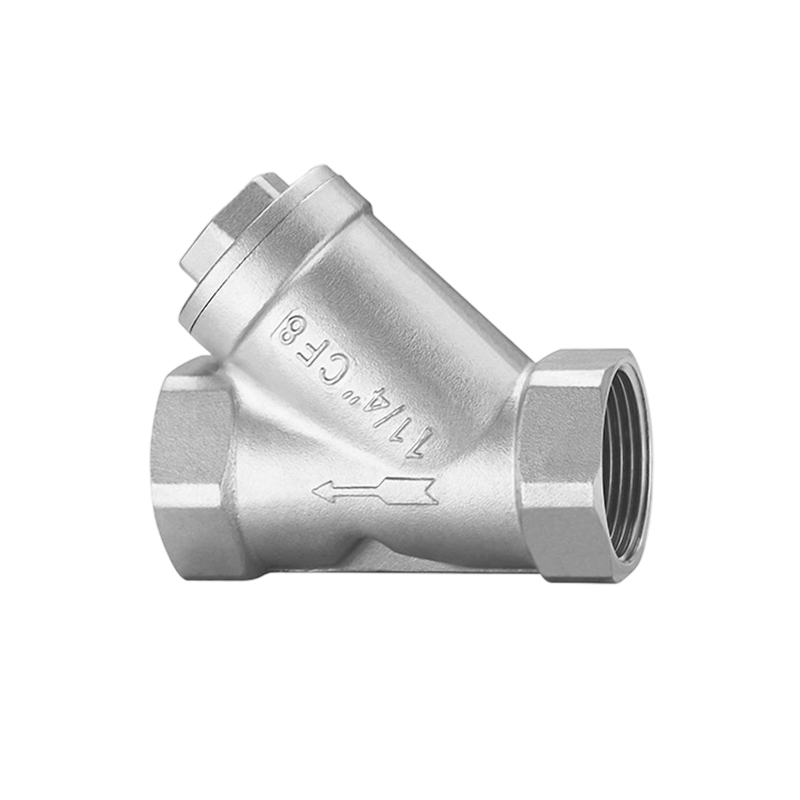
Overview of Y Strainer Design
A Y strainer is characterized by its angled body design, allowing contaminants to be captured within a removable screen while maintaining a continuous flow path. The “Y” shape enables the strainer to be installed in horizontal or vertical pipelines with relatively compact space requirements. A 100 mesh screen provides fine filtration suitable for capturing small solid particles that could otherwise damage downstream components.
The screen is typically housed inside the body and can be accessed for cleaning through a removable cap or cover. This design supports repeated maintenance without the need to disconnect the pipeline.
Comparison with Basket Strainers
Basket strainers are often considered alongside Y strainers because both serve similar protective purposes. However, basket strainers usually require more installation space due to their vertical configuration. They are commonly used in applications where higher flow volumes are present and where frequent cleaning access is required.
In contrast, a 100 mesh Y strainer is often selected for pipelines with limited space or where flow interruption should be minimized during maintenance. While basket strainers can hold more debris before cleaning is required, Y strainers provide a balance between filtration precision and compact installation.
Comparison with Inline Screen Filters
Inline screen filters are installed directly within straight pipeline sections and typically offer simple construction. These filters may be suitable for applications with low contamination levels, but their screen access can be less convenient compared to Y strainers.
A 100 mesh Y strainer allows easier screen removal and inspection, making it more practical for systems where regular maintenance is expected. Additionally, the angled screen position can help distribute debris accumulation more evenly.
Comparison with Cartridge Filters
Cartridge filters are designed for fine filtration and are commonly used in applications requiring high cleanliness levels. They often rely on replaceable filter elements rather than reusable screens.
Compared with cartridge filters, a 100 mesh Y strainer offers reusable filtration and simpler maintenance routines. Cartridge filters may require element replacement, while Y strainers typically involve cleaning and reinstallation of the same screen.
Performance and Flow Characteristics
Filtration performance is influenced by screen mesh, flow rate, and fluid properties. A 100 mesh Y strainer captures fine particles while maintaining stable flow conditions when properly sized. Other filter types may offer different balances between debris retention and flow resistance, depending on their internal structure.
Installation and Maintenance Considerations
Y strainers are generally easier to integrate into existing pipelines due to their compact shape. Maintenance involves isolating the line, removing the screen, and cleaning it before reassembly. Compared with other filters, this process is straightforward and does not require specialized tools.
Application Suitability
A 100 mesh Y strainer is suitable for systems requiring fine particle removal, moderate flow stability, and practical maintenance access. Other filter types may be selected for higher debris loads or specialized cleanliness requirements.
Comparing a 100 mesh Y strainer with other filters highlights the importance of selecting filtration based on system conditions rather than general assumptions. Each filter type serves a purpose, but Y strainers remain a practical choice for many industrial pipelines where fine filtration and operational flexibility are required.